


About CNC
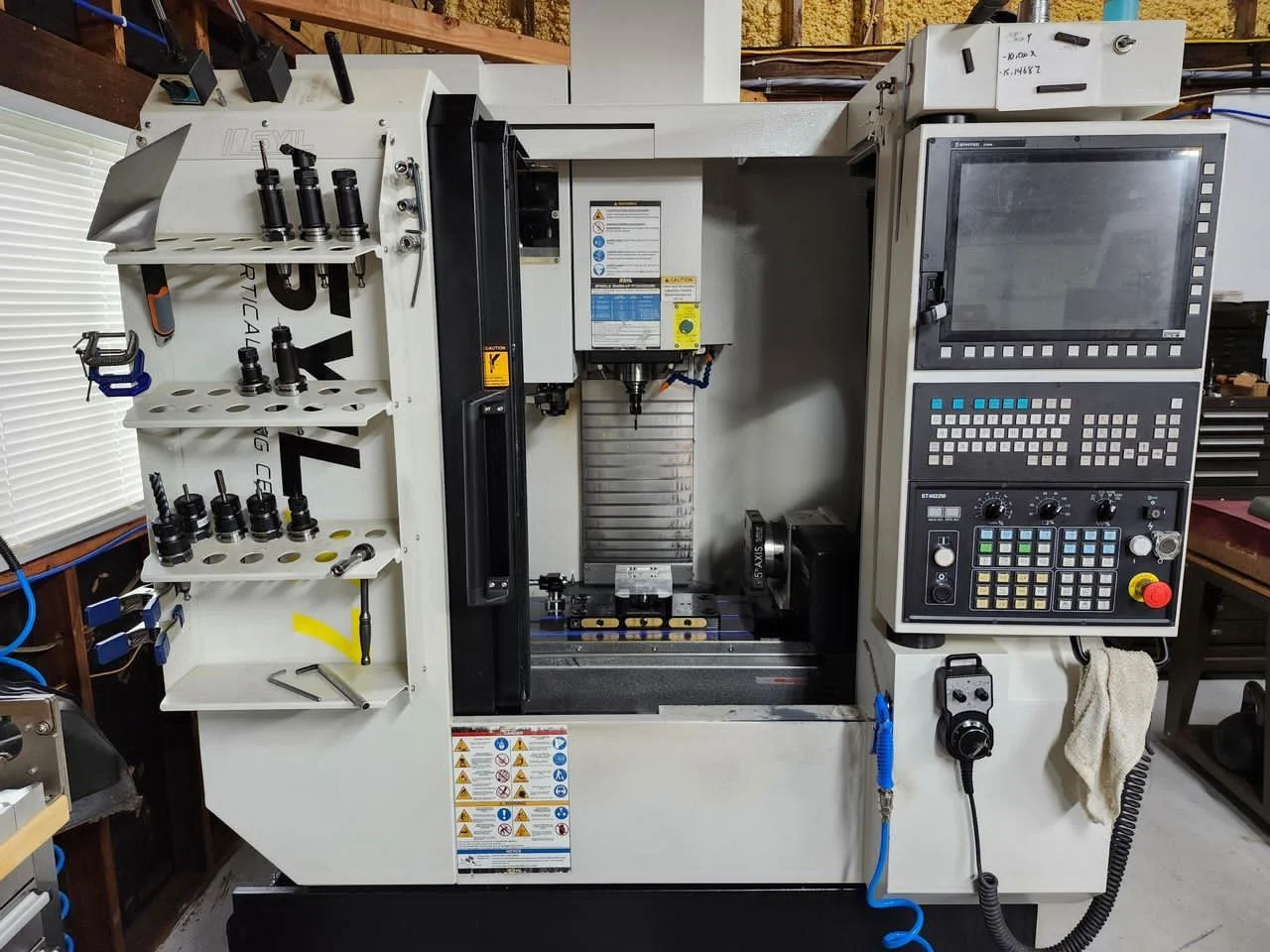
CNC Programming Solutions is a precision machining provider specializing in tight‑tolerance CNC milling, turning, and advanced finishing processes. Our operation is built around disciplined process control, consistent quality, and the ability to support complex geometries across prototype and production environments.
Since our founding in 2022, we’ve expanded from a small startup shop into a technically capable machining partner for engineers, manufacturers, and product developers. Our capabilities include 4‑axis milling, 5‑axis milling support, 2‑axis turning, bead blasting, vibratory deburring, anodizing, and a range of protective and cosmetic coatings. This combination allows us to deliver fully finished components with reliable dimensional accuracy and repeatable performance.
We follow industry‑recognized quality practices, emphasizing in‑process verification, toolpath optimization, and efficient workflow design. Every part is programmed, machined, and inspected with a focus on minimizing variation and maximizing reliability. Our customers rely on us for components that must fit, function, and assemble correctly the first time.
CNC Programming Solutions continues to invest in equipment, tooling, and process improvements to expand our capabilities and support increasingly complex manufacturing requirements. Our mission is straightforward: deliver engineered parts with precision, consistency, and the level of technical communication that professionals expect.
WHAT WE DO

4 AXIS MILLS

VIBE DEBURRING

2 AXIS LATHE

ANNODIZING

BEAD BLASTING

POWDER COATING
F.A.Q (Frequently Asked Questions)
-
CNC (Computer Numerical Control) machining is a manufacturing process where pre-programmed computer software dictates the movement of factory tools and machinery. It can be used to control a range of complex machinery, from grinders and lathes to mills and routers. With CNC machining, three-dimensional cutting tasks can be accomplished in a single set of prompts.
-
CNC programming involves creating a code (often in G-code) that tells the CNC machine how to move its tools to produce the desired part. Key elements include:
G-Code: The programming language used to control CNC machines.
CAD/CAM Software: Used to design parts and generate the G-code.
Machine Coordinates: Define the position of the tool in relation to the workpiece.
Feed Rate and Spindle Speed: Control the speed of the tool and the rate at which material is removed.
-
Lead times for CNC machining jobs can vary depending on several factors:
. Complexity of the Design: More intricate designs take longer to machine.
. Material: Harder materials can take more time to machine.
.Volume: Higher quantities typically require more time.
. Machine Availability: Lead time can be affected by the current workload of the machine shop.
-
CNC machines can perform a wide variety of operations, including:
Drilling: Creating round holes.
Milling: Removing material to shape parts.
Turning: Rotating the part against a cutting tool.
Grinding: Precision surface finishing.
Cutting: Using high-speed tools to cut materials into desired shapes.
-
Pricing for CNC machining is influenced by:
Material Costs: The type and amount of material used.
Machine Time: The duration the CNC machine will run to produce the part.
Labor Costs: Setup time and post-machining processes.
Complexity: More complex designs often require more time and precision, thus higher costs.
Quantity: Bulk orders might reduce the per-unit cost.